A Villain Who Wins And Then Just… Stands There.

A Villain Who Wins And Then Just… Stands There.

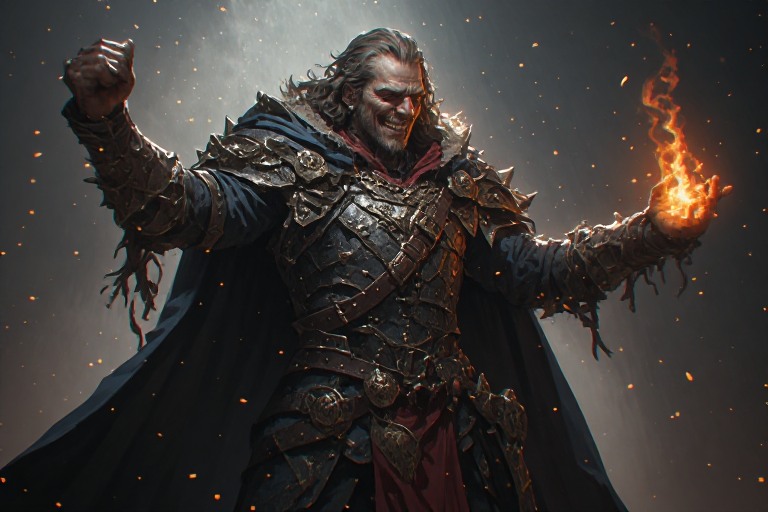
Mokallai gets everything he wants about halfway through this arc. Dyiij’s fealty, a truce, total leverage over an entire planet. And what does he do with that victory?

He cups his face in his hands and can’t answer his own question: to what was he even aiming for?

That’s the villain beat I’m proudest of so far, and I want to talk about why “winning feels like nothing” is scarier to write than “still hasn’t won yet.”

Menace Is Easy. Hollow Is Hard.

It is genuinely not difficult to make a villain frightening. Give him power, give him a body count, have somebody tremble in a hallway when they hear his name. Mokallai’s got all of that already — the Kyusoa skull throne alone is doing a lot of heavy lifting on the intimidation front.

But menace on its own is kind of a dead end, storytelling-wise. Once he’s won, what’s left? If the answer is “more winning,” you’ve basically written a video game boss, not a character.

So instead: he wins, and it curdles instantly. Bitter bile in the back of his throat. That’s the good stuff. That’s the beat I’d tell past-me to chase harder if I could go back and lean on it earlier in the draft.

The Compensating-For-Something Villain.

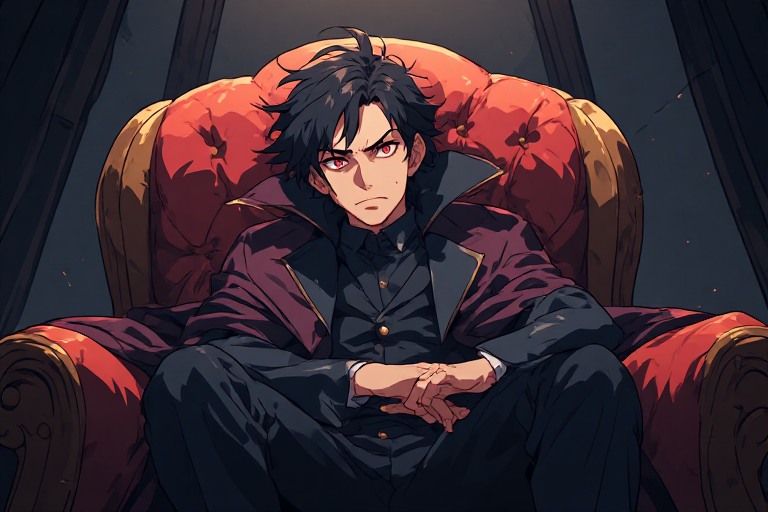
The other thing I like about him is that he’s insecure in a way that’s almost embarrassing to watch. He’s running the Einarriel-versus-Maowd-Ib rivalry like a jealous manager who can’t stop playing favorites. He flinches at the word “god” even while tolerating an entire cult built around him. That’s not a guy who feels powerful. That’s a guy performing powerful, badly, in front of the two people closest to him, and I think readers clock that even when the characters in-scene don’t.

A villain who’s compensating reads as a person. A villain who’s just powerful reads as weather.
Where I Think I Still Have Work To Do.

If I’m being honest with myself (an occasional and uncomfortable hobby of mine), his whole immortality obsession is currently more stated than felt. We know what he wants — to become Deathless, to force his way into Blaqnyon on his own terms — but not enough about why that, specifically, versus any other kind of ultimate power a guy in his position could chase. Since the hollowness is already my strongest card with him, I owe him one more scene that roots the immortality thing in something actually his: a fear, a memory, somebody he lost. Otherwise it’s just “villain wants ultimate power,” and I already know I can do better than the default.

He’s also, right now, defined a lot through other people’s reactions to him — crueler than Ib expects, softer than Einarriel expects. Which, fine, that’s a legitimate way to build someone. But it makes him a little reactive on the page. The “what was I even aiming for” scene, where we’re just alone in his head with no one around to define him against? That one did more character work in one paragraph than three scenes of other people describing him.

Lesson to self: more of that, please.

Until next time.

~Spenx
Sentence Rhythm as a Power Tool.

Sentence Rhythm as a Power Tool.

Words of Power was about word choice: which word, in which spot, does the most work. This one is the sibling topic nobody asks about as often. It’s not which words you pick. It’s how long the sentences carrying them are, and what that length is doing to the reader’s pulse.

Rhythm Is Pacing You Can’t See Coming

Readers don’t consciously track sentence length. That’s exactly why it works on them. A run of long sentences produces a kind of mellifluous drift, one clause folding into the next, and a reader can sink into that rhythm for pages without noticing they’ve slowed down. A short sentence dropped into that same rhythm lands like a foot hitting the floor.

Neither length is “better.” What matters is contrast, and contrast only works if you’ve established a baseline first. A short sentence after a long one reads as a jolt. The same short sentence sitting among ten other short sentences reads as nothing at all, because there’s no baseline left to break.

What Long Sentences Are For

Long, flowing sentences are the right tool when you want the reader relaxed, absorbed, unaware of the mechanics. Description, introspection, the accumulation of small details that build a mood rather than deliver a plot point, these all benefit from sentences that keep extending, clause after clause, without giving the reader a place to stop and check their footing.

The risk is a rhythm so consistent it turns into white noise. Even a writer with a genuinely lovely natural cadence can lull a reader to sleep if that cadence never breaks. Beautiful and monotonous aren’t opposites. They can be the exact same sentence, repeated.

What Short Sentences Are For

Short sentences step up pace. Cut them down further and pair them with frequent paragraph breaks and the pace steps up again. This is why tense dialogue exchanges and action beats read fast even when nothing about the vocabulary itself is urgent, the urgency is coming from the white space and the clipped rhythm, not the words.

A sequence of short sentences also does something specific to tension: it removes the reader’s ability to relax into a flow. Each new sentence forces a fresh decision to keep reading, rather than letting momentum carry them. That’s uncomfortable in exactly the way a chase scene or a confrontation should be uncomfortable.

The Move That Actually Works

The single highest-leverage rhythm technique is the one that gets recommended and then ignored: follow a long sentence with a short one. Let a sentence build, accumulate clauses, extend the reader’s held breath, and then cut it off hard with something four or five words long. The short sentence doesn’t need to be clever. Its entire power comes from arriving right after something that wasn’t short.

Don’t turn this into a metronome either. A strict alternating pattern, long-short-long-short, becomes just as predictable and numbing as an unbroken run of either. The goal isn’t a pattern. It’s a baseline the reader has settled into, broken at the exact moment you want them to feel the break.

Reading Your Own Draft for This

Rhythm problems are hard to catch by reading silently, because your eye smooths over what your ear would catch. Read a page out loud, or have something read it to you. Where you find yourself breathless, that’s your prose doing what it’s supposed to. Where you find yourself checking out, that’s usually a rhythm that’s run too long without variation, not a plot problem at all.

Keep writing.

Every Scene Starts With a Date Nobody Asked For.

Every Scene Starts With a Date Nobody Asked For.

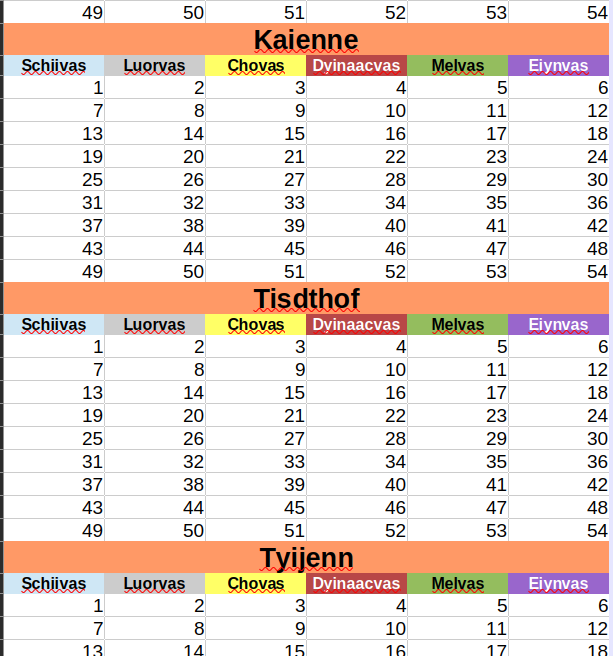
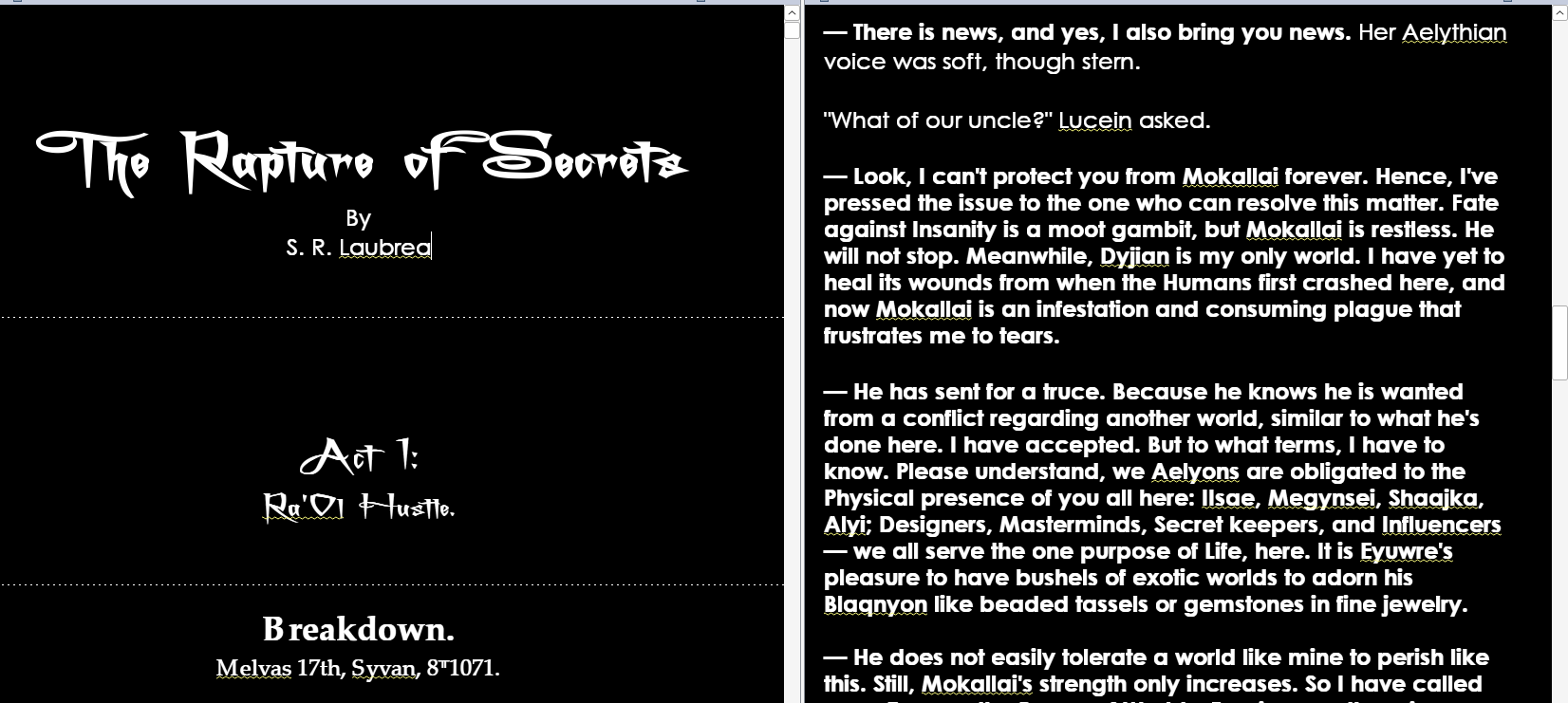
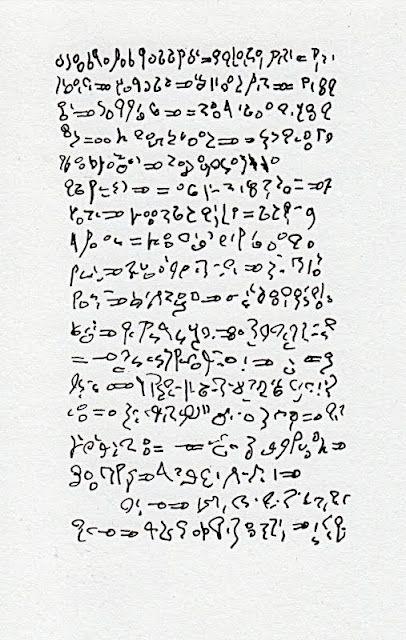
“Melvas 17th, Syvan, 8╥1071.”

That’s the first line of actual worldbuilding you get in The Rapture of Secrets, before a single character has said a word, and I will die on the hill that it’s doing more work than it looks like.

Why Bother With a Fake Calendar At All.

Here’s the thing about “it was a Tuesday” — it’s free. Everyone already knows what a Tuesday is. But “it was a Tuesday” also tells you literally nothing about the world you’re standing in. A made-up calendar costs you a little reader patience up front, sure, but it pays you back every single time, because it means the world was already running before page one and it’s going to keep running after the last page too. Nobody had to invent Syvan for my benefit. It was just… Tuesday, over there.

I’m not going to sit here and pretend I workshopped this technique like a genius. I just really like the aesthetic of a header that looks like it was stamped by a bureaucrat from another dimension. But it turns out that liking the aesthetic and it doing real narrative work aren’t mutually exclusive, so, hey. Win-win.

What It’s Actually Buying Me.

No exposition needed. I don’t have to stop the narrative to tell you time is passing, or that different chapters are happening in different places under a different sky. The header just tells you.

A sense of scale. “8╥1071” implies a very long history sitting behind this one scene, whether or not I ever explain the numbering system (I have not. I may never. You’ll live).

Texture for free. Different month-names (Syvan, Aszuul, Knapuani) sprinkled in without comment start to feel like seasons or regions the same way “October” does, even though you’ve never been told what any of them mean.

The Part Where I Almost Ruined It.

Funny enough, this is the exact same instinct that got me into trouble during the third draft — the one with the footnotes. I wanted so badly to explain the lore properly that I nearly buried the story under an appendix’s worth of context before the reader had earned any of it. The calendar header works precisely because it doesn’t explain itself. It’s a tiny, disciplined dose of “trust the reader,” sitting right at the top of every scene, and I had to relearn that lesson the hard way before I let myself actually use it right.

Small technique. Steal it if you want it.

Until next time.

~Shiri

Let Them Be Ugly.

Let Them Be Ugly.

There’s a nervous way writers handle bigotry in dialogue, and you can spot it a mile off. The slur gets softened. The bigot gets a redeeming moment two lines later, just so nobody’s confused. Or the whole thing gets a wink at the camera so the Reader knows the Writer doesn’t really mean it. I get why people do it. Nobody wants to be misread. But here’s the thing: real bigots don’t hedge, and if your character hedges, you didn’t actually write a bigot. You wrote someone doing an impersonation of one.

My characters say ugly things. And I don’t clean it up after. Not because I’m trying to shock anybody, but because I trust you, the reader, to know the difference between a character’s voice and mine without me holding your hand through it. That’s the whole ask. Not “believe I don’t mean this personally.” I shouldn’t have to say that. Just: trust yourself to know it.

Let me show you what I mean.

Easy version first: A dad sees his son sitting with my character Northway, shooting the breeze, sharing peanuts, nothing weird going on, and without knowing ANY of that, the guy snarls “You’re one of those pedophile faggots, aren’t you!?” and hauls his kid off. That man is just wrong. Nobody’s confused about him, nobody feels for him, and honestly? Any writer can pull that off. It costs you nothing. It’s rubbish.

Now to the one that actually costs something: Later in the same book, Northway runs into the ghost of his childhood sweetheart, his fiancée, the one he lost, the one this whole story already made you grieve right alongside him. She is NOT some stranger. She is not wrong to be in pain. In the middle of that pain, jealous over the woman who’s taken her place, she calls Burningsand a slur. A bad one. Bad enough I’m not printing it here, and I’ll get to why.

That’s a different animal entirely, because I’d already spent real pages making you care about her. The easy move, right there, is to pull the punch. Give her a softer line. Let her grief excuse it. I didn’t do that. She says the ugly thing plain, and nobody rushes in to forgive her or punish her for it. Both things just get to be true at once: her pain is real, AND what she said is inexcusable. Holding both without picking one, that’s the actual work. Anyone can write the dad at the pool. Writing her is what costs you something as a Writer.

That’s the test I’d give you, if you want one: could the ugly line survive without me jumping in to tell you how to feel about it? The pool dad doesn’t need that test. Nobody’s confused. Northway’s former fiancee does need it, and she passes, because I’m trusting you to already know a person can be someone you love AND say something unforgivable, in the same breath, without either one canceling the other out.

And honestly, that’s what real bigotry actually looks like most of the time anyway. It’s not cartoonish strangers. It’s people you already love, caught in the moment they feel most entitled to their worst self. Writing it softer than that isn’t kindness to you, the reader. It’s just me ducking the harder book.

I’m not going to tell you the word she used. That’s not me being coy. It’s the same rule, just running the other way. In the book, that word is hers. It’s her worst moment, and I let her have it without apologizing for her. Out here, talking to you directly? It’s not hers anymore. It’s just an ugly word in MY mouth, with no character left to carry it. So you don’t get it that easy. If you want to know what she said, go meet her the way I did: inside the story, where it’s actually hers to say, and actually costs what it should.

That’s the whole difference between writing a bigot and being one. It was never about the words on the page. It’s about whose mouth they’re allowed to live in, and whether you, the Writer, are brave enough to step back and let them.

No matter what you do, keep writing.

~ Shiri

I Solved a Dialogue Problem With the Bold Button.

I Solved a Dialogue Problem With the Bold Button.

Here’s a dumb little formatting trick that I will defend to my grave: when Dyiij or Mokallai speak in their Aelythian god-voice, I don’t tag it. No “she said telepathically,” no “his voice boomed in their minds.” I just… make it bold.

Look, I can’t protect you from Mokallai forever.

That’s it. That’s the whole stage direction. Bold text, dash out front, and you’re supposed to just know this isn’t coming out of a throat.

Why Not Just Say “Telepathically”?

Because “she said telepathically” is exhausting to read fifty times over the course of a manuscript, and it puts the mechanism front and center every single time when what I actually want front and center is the content of what’s being said. Nobody wants a stage direction before every line of a god talking. You want the eeriness of the voice itself.

Bold does the tagging for free. Your eye catches the visual shift before you’ve even consciously parsed a word of it, and that little jolt — oh, this is Different, capital-D — happens instantly, every time, with zero narrative real estate spent on it.

It’s Also Just… Characterization?

The thing I didn’t fully appreciate until I was deep into revisions: formatting can do characterization work that prose usually has to carry on its own. Bold Aelythian speech reads as authoritative and a little detached before you’ve processed a single word of the actual line. That’s tone, delivered typographically, for free, before the sentence even starts doing its job.

Compare that to how much prose you’d need to burn establishing “this voice sounds different, otherworldly, commanding” every single time it shows up. I’d rather spend that word count elsewhere. Let the formatting carry the tone; let the actual words carry the meaning.

The Catch, Because There’s Always One.

This only works because I use it sparingly. If everyone in the book had a formatting quirk, you’d lose the “wait, something’s different” jolt entirely — it’d just be Wednesday. Bold is reserved for exactly two characters’ god-voice, and The Catch, Because There’s

that scarcity is doing half the work. The second I overuse a trick like this, it stops being a signal and starts being wallpaper.

Small thing. Steal it, but steal it sparingly.

Until next time.

~Shiri