
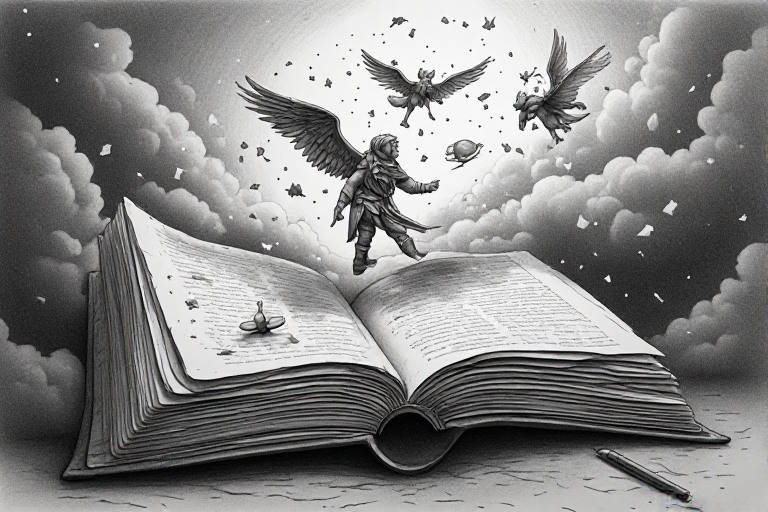
I promised this one a while back, in “On What to Write.” I said the kind of storytelling you use deserves a post of its own, separate from genre and style. Here it is.
Structure Is Not the Same Thing as Form
Before getting into types, it’s worth untangling two words people use interchangeably: form and structure.
Form is the container. A story can take the form of a letter, a diary, a string of emails, a verse narrative. Form is what the reader is holding, visually and conceptually, before they’ve read a single line of plot.
Structure is the skeleton underneath: how many setbacks the character faces, where the climax lands, whether there’s a long comedown after the conflict resolves or none at all. You could write the exact same structure as a straight third-person novel or as a fractured series of first-person fragments from five different heads. Same bones, different skin.
Most writers only ever think about structure. Form is the one people forget they’re allowed to touch.
The MICE Quotient
Orson Scott Card broke story down into four categories, not plots, but structures, organized around the question of what actually opens and closes the story. He calls it the MICE quotient: Milieu, Idea, Character, Event.
Milieu. The story is about the place. A character arrives somewhere strange, takes it in, is changed by it, and either leaves or doesn’t. Gulliver’s Travels is the textbook case; nobody reads it for Gulliver’s inner life. They read it for the lands. If your story keeps wanting to stop and look around, you’re probably writing milieu, whether you meant to or not.
Idea. The story exists to chase down a piece of information. What if a virus only killed people with the gene for telepathy. The idea sits in the driver’s seat, and the plot is just the mechanism for uncovering it. Everyone’s actions and dialogue exist to serve that one central question. Hard science fiction lives here.
Character. The plot is a byproduct of who the characters are. Each scene happens because of the last person’s reaction to the one before it. This is the type where outlining ahead of time can actually work against you. The honest version of a character-driven story is one where you find out what the character does by sitting down and watching them do it.
Event. Something has gone wrong with the world, and the story doesn’t start at the moment it breaks. It starts when the person capable of fixing it steps into the frame. It ends when the wrong is righted, though not necessarily returned to exactly how it was. Most fantasy is event-driven. So, for what it’s worth, are Macbeth and Emma.
None of these are pure in practice. A milieu story can carry a murder mystery in its side pocket. A character story can have a strong secondary interest in the world. The categories aren’t rules so much as a way to figure out where your story actually opens and closes, which, according to Card, is the harder question than most people admit.
Where Form Gets Weird
This is where I’d point back to something I already wrote about directly: second-person narrative. Most of the industry treats “you” as a gimmick reserved for Choose Your Own Adventure books, a form so narrow it barely counts as a real option. But nothing stops you from using second-person address inside a closed, linear, traditional structure, where “you” doesn’t mean the reader at all, but the story’s own nameless protagonist.
That’s a form choice layered on top of whatever MICE structure the story already has. It doesn’t change whether the piece is milieu or character or event. It changes the distance the reader stands at while experiencing it. Readers I’ve talked to about that kind of story keep circling back to the same reaction: a mix of being pulled in and being unsettled by not quite fitting the “you” they’ve been handed. That’s form doing its job.
The Point
Knowing these categories isn’t about picking one off a shelf before you start typing. It’s a diagnostic. If a draft feels shapeless, ask which one you’re actually writing. You’ll often find you’ve been trying to write two incompatible types at once, or you’ve picked a form that’s fighting your structure instead of sharpening it.
Keep writing.