
2nd-Person narrative is a narrative mode so shunned by the mainstream publishing industry that utilizing it to uncover its effects and honing it to be a sustainable method of storytelling is a myth. To a mainstream genre or literary fiction writer, the limited definition of its use as being a tool to only address the reader, as well as its being barred from the industry as a mere nuisance to readers is something to be adhered to like a creed.
Yet, to the burgeoning experimental writer, 2nd-Person has its appeal, and rightly so. As a misunderstood, under-utilized method of storytelling, 2nd-Person as a narrative mode operates in mysterious ways. It’s use of language such as the word “YOU” does stand as a form of address to the reader, as it invites them to place themselves in the situations invoked by the author. This is the crux of the titular Choose Your Own Adventure! style of story. But what if you make use of such language in a story that is told in a more traditional, closed and linear format?
Here are my take-aways from doing just that.
SKIN, told in 2nd-Person.
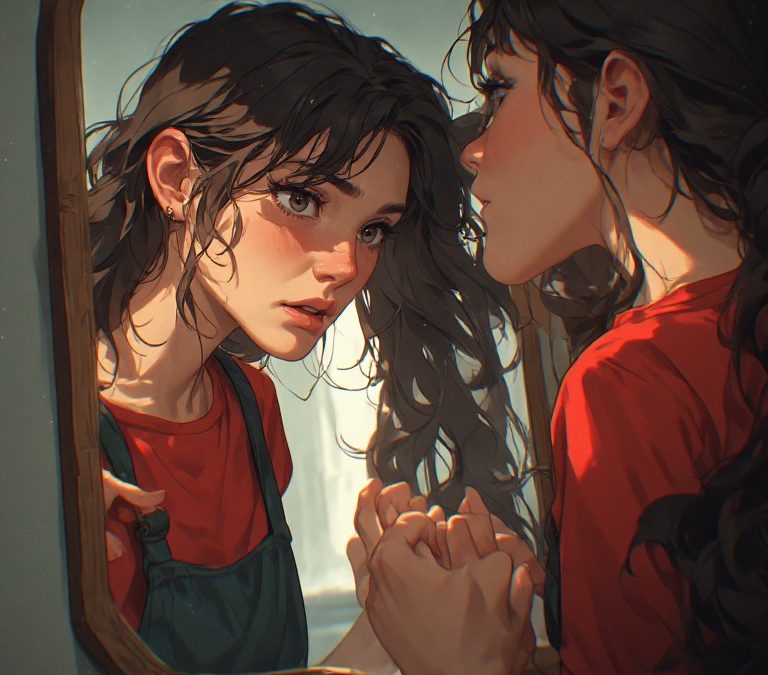
As the author, there isn’t much I have to say about Skin now that I’ve published it. After all, what harm could a story about culture shock do that hasn’t already been witnessed and written about before? Yet, it was from my desire to be challenged that I made the decision on a whim to write that tale as though it were intended for 2nd-person use. Though not a Choose Your Own Adventure tale, Skin is evocative in that it does invite the reader into the situations I’ve written about, but it also plays with the fact that YOU does not refer to the reader, but to the nameless main character in the story.
It was through the use of 2nd-person narrative that Skin got its bite. The readers, those whom I’ve spoken to, were gripped by being able to insert themselves into the story, although they weren’t sure what to make of the obvious layer of distance of not quite fitting in as the titular character. It led to instances of introspection and thrill, to the extent that they had to read it multiple times before being able to dismantle the tale and put it to rest.
In the context of a short story, it makes sense and works well. In part because readers know they’re not strapped in for miles should this turn out to be a bad fit for them. But, too, it is just the right amount of length for its implementation to not feel like an exhaustive, cheesy gimmick.
The important thing to underscore, should you take up Skin as an experimental read, is that you will need to experiment with it to get it just-right for the tale you’re intending to tell. 2nd-person didn’t up-and-drop into my lap. I had to contend with several openings and other seemingly extraneous details before it would get off the ground. Once it had, I needed to figure out how to make it feel as natural as possible, and during this phase I had the hardest struggle.
As a loner type of writer, there wasn’t a lot of feedback to get on it. As with a lot of experimentation, you may find yourself at odds against the mainstream and genre-loving crowds. In these scenarios, you have to trust your intuition (this is part of why it is good to know the basics and “rules” of writing, so that you know how to steer yourself towards familiar territory in the event that you might get lost). With enough fooling around with it, it’ll eventually begin to sound natural.
Once you’ve reached this phase of practice, 2nd-person gets… interesting.
2nd-Person: A Hybrid of 1st and 3rd…?
What are the effects of writing in 2nd-person as a narrative mode? You may have heard that it’s the most annoying of the narrative modes, the most taxing way to convey information, and readers don’t like it. While it may be true that readers aren’t used to this narrative mode, and that this particular narrative mode does not sell well, there is a wealth of experience to be gleaned from it.
2nd-person is unique in that it demands the writer have a different kind of intimate understanding of their story, for the simple fact that you’re calling the reader to be an active participant in the tale. Your other techniques will become quite limited. Things such as expositional infodumps, or heading off the beaten path and venturing into character arcs may have to take a back seat as the only information you’d be able to disseminate is that which the narrator immediately knows. Even then, you have to tread carefully for if you wear your reader down, they’re not going to make it through the book.
That being said, writing in 2nd-person narrative is pretty niche. It feels intimate like 1st person due to the nature of its language, and like 1st person, is just as limited, but may also at times find itself using literary strokes from the 3rd limited perspective. What does that mean?
That 2nd-person is closer, more intimate and intrusive to the reader, but it can be utilized in such a way that it flows almost as naturally as the common 3rd pov. There is no easy way to achieve this. Each tale is different, and each author needs to have a strong grip on their voice when attempting a story in this narrative mode. When, where, and how you use “YOU” and invoke the reader, or refer to a nameless character, or however you’ve gotten it set up will impact the overall readability of the story.
But if not addressing the reader, as I’ve hinted at, what else can 2nd-person be used for?
Rhetoric & 2nd-person.
What is rhetoric? Rhetoric is how we use language to influence our readers. 2nd-person is common in academic settings and rhetorical discourses, as the power of invoking the audience to be critically-thinking participants in the discourse is often seen as desirable to get the proper effect out of them.
On it’s own, Rhetoric is a winding and broad subject, the likes of which I don’t have time to get into as a writer myself. Still, it does not alter that its use of 2nd-person in address is critical to sustaining the message that the speaker is presenting. In these live or broadcast instances of having to address the audience, perhaps the best aspect to glean from the use of this technique is how to drive the point home in such a way that it impacts the listener.
As a writer, it’s important to keep that barrier in mind, that you may not always be talking directly to your reader such as in cases of orating carefully contrived messages to whatever gain or detriment. As your story progresses, you are going to have to carefully handle stretches of narration. Then what? Do you continue to refer to the reader as you describe the monotony of a glorious morning wherein they wake up, or the high-speed police chase that led to the discovery of unknown treasure?
Intimacy, Discomfort, Subjectivity, & YOU.
Sometimes, we have to acknowledge that prolific use of a technique is a bad thing. Given the rarity of 2nd-person narratives, and especially full-featured novels, there is always a degree of discomfort that readers will experience. A skilled writer will find ways to minimize the effects readers feel when utilizing this niche, experimental narrative mode.
Yet, for those who develop a liking to it, 2nd-person’s use is thrilling and compelling, especially because it puts the reader on the spot. A well-written tale in this narrative mode evokes such emotion and imagery the likes of which is unique to the method in which it is told. Such a literary skill should not go without practice, as even in small doses where this technique is not the focal method by which a story is written, its use can make statements and situations stand out to your audience as being more memorable.
I did mention that there is a level of distance between the writer, the reader, and the prose. Subjectivity is important when using 2nd-person. Unlike 1st and 3rd, it’s not as objectively interpreted, again, because the reader is involved, and beckoning them to participate invites them to bring their own experiences, sentiments and judgments to the fore of the tale. Despite how well-crafted your story may be, there will always be misinterpretations, and in the case of 2nd-person, all the more so.
Be prepared to receive criticism and feedback that you weren’t anticipating, and wouldn’t have thought to have gotten. Not in the usual “One man’s story is another man’s dumpsterfire kindling!” type of way, but be aware that people will bring the unexpected to the table.
It leads me to think, that as niche a storytelling mode as 2nd-person is, and with all the challenges it imposes, it has the potential to be a method of storytelling that is unique to and colored by the reader, since as the author, I’d have given them the freedom to accept or reject the plight and messages of the tale I’d woven in that style.
To 2nd, or not to 2nd?
There’s a lot still to uncover about 2nd-person narrative that I’m going to have to come back to address. But, in a nutshell, while you may be itching to give this one a try, I recommend giving it a lot more thought before diving right in. 2nd-person requires skills drawn from both 1st and 3rd, but utilized in ways different than we’re used to. Whether or not you should boils down to basic reader’s comprehension, and hoo-boi will that be a subject to go over.
For in the mean time, here’s some light reading on 2nd-person narrative.
Until next time.