
There is an easily overused, tropey version of “Sympathies for Monsters” that’s a gimmick. I’m talking about where a writer shows you the creature getting called a slur by someone worse than him, or misjudged over a simple misunderstanding, and BAM! The reader instantly becomes more sympathetic to the character. Not because the creature earned that sympathy, but because the accuser did something uglier first. It’s a lazy gimmick, but one that works.
My books utilize that gimmick, too. But the way I go about it is different, and not the cheesy, slur-and-simp use. There is a harder version that I love to use in my manuscripts, and it’s worth building whole books around. What I mean is, it is more worth asking your readers to stick around after he tells the truth. Not after he’s been incidentally misjudged.
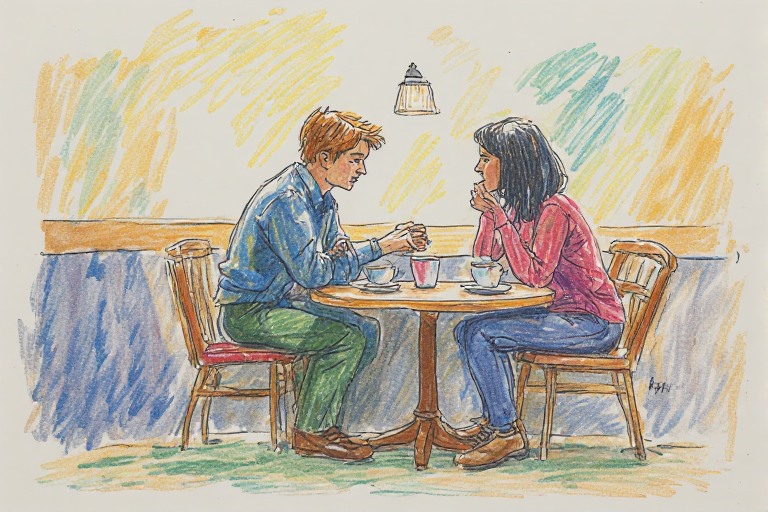
This is what I’m talking about: There is an early scene where a reporter calls Northway a “slimy, loathsome toad” to his face, right after he’d spent the moment protecting Jaime and staving off the worst that he can do. That baseless accusation is the cheap version, and I use it all the time. Readers immediately give in to sympathy for Northway, being misjudged by a stranger, and I’ve hardly lifted the pen.
Later, you find out what Northway really does for a living. Without being led-on, he tells his lover about being part of a harvesting operation, treating humans like they’re cattle, and he believes in what he’s doing. Nobody misjudged him, and he’s not being persecuted for something innocent. He’s a monster. He’s not hiding it.
Giving characters these dichotomies does more than add flavor. It does more than allow me, as the storyteller, to run freely with a narrative, dipping into light and dark themes and motives as I see fit. I find it truly brings a character to life, and adds stakes to the story, whether or not a reader is able to walk alongside Northway on his journey, knowing his plans and feelings towards Humanity.
Dawnfury is not the only book where I do this. I enjoy testing my Reader’s investments in my characters across stories and in a variety of ways. “Sympathy for the Monster” is just one of them. I recommend building up to those moments with more foundational back story and character actions over the one-and-done sucker-punch we see executed so often in fiction. I use it to give the reader a choice, to see whether or not they’ll continue the journey and enjoy it in the face of the truth. That’s what I’m actually asking of my readers when I hand them my monsters: Neither forgiveness nor condemnation, but the willingness to keep going after they’ve witnessed the ugly. The slurs are easy bait. Anyone can write a simple scene, call someone a slur, and immediately cash in on cheap sympathy. That’s not depth.
What’s deep is writing the actions and thoughts that lead up to a genuine confession. One where the reader has to decide, when there are no misunderstandings, to continue to stand by that character.
Bear in mind that building up to readers’ sympathies needs to be handled well. You can’t give full stage to one brand of conflict or event, and not give time to those of another sort. Don’t spend all your time setting up for the positive, good moments and blow through the bad. Likewise, don’t bog your reader down with only cutting, bad events. While it’s not always appropriate to apply an even hand with their frequency, you do need to give your readers two things:
1. Enough time for them to process what’s happened, and
2. Enough of these events, good and bad, for them to have a solid rapport with the character(s).
Readers need breaks when going in deep. That’s regardless of whether or not it’s a positive or negative incident. Readers need breaks because of the emotional intensity you evoke, especially during the ‘payoff’ moment when everything clicks. They’ll also need these breaks between buildups. Because it’s easy to overwhelm and exhaust them when you’re pulling on their judgment and emotional strings all day.
But, ye. Reader Sympathies for a Monster character is a joy to get into. I don’t want anyone feeling mistakenly sorry for Northway. I want you to know precisely who he is, because by the end of the book, I want you to come to grips with the truth behind a story like his, whether you can stand beside him or not.
See you on the other side.
~ Shiri