Sentence Rhythm as a Power Tool.
Words of Power was about word choice: which word, in which spot, does the most work. This one is the sibling topic nobody asks about as often. It’s not which words you pick. It’s how long the sentences carrying them are, and what that length is doing to the reader’s pulse.
Rhythm Is Pacing You Can’t See Coming
Readers don’t consciously track sentence length. That’s exactly why it works on them. A run of long sentences produces a kind of mellifluous drift, one clause folding into the next, and a reader can sink into that rhythm for pages without noticing they’ve slowed down. A short sentence dropped into that same rhythm lands like a foot hitting the floor.
Neither length is “better.” What matters is contrast, and contrast only works if you’ve established a baseline first. A short sentence after a long one reads as a jolt. The same short sentence sitting among ten other short sentences reads as nothing at all, because there’s no baseline left to break.
What Long Sentences Are For
Long, flowing sentences are the right tool when you want the reader relaxed, absorbed, unaware of the mechanics. Description, introspection, the accumulation of small details that build a mood rather than deliver a plot point, these all benefit from sentences that keep extending, clause after clause, without giving the reader a place to stop and check their footing.
The risk is a rhythm so consistent it turns into white noise. Even a writer with a genuinely lovely natural cadence can lull a reader to sleep if that cadence never breaks. Beautiful and monotonous aren’t opposites. They can be the exact same sentence, repeated.
What Short Sentences Are For
Short sentences step up pace. Cut them down further and pair them with frequent paragraph breaks and the pace steps up again. This is why tense dialogue exchanges and action beats read fast even when nothing about the vocabulary itself is urgent, the urgency is coming from the white space and the clipped rhythm, not the words.
A sequence of short sentences also does something specific to tension: it removes the reader’s ability to relax into a flow. Each new sentence forces a fresh decision to keep reading, rather than letting momentum carry them. That’s uncomfortable in exactly the way a chase scene or a confrontation should be uncomfortable.
The Move That Actually Works
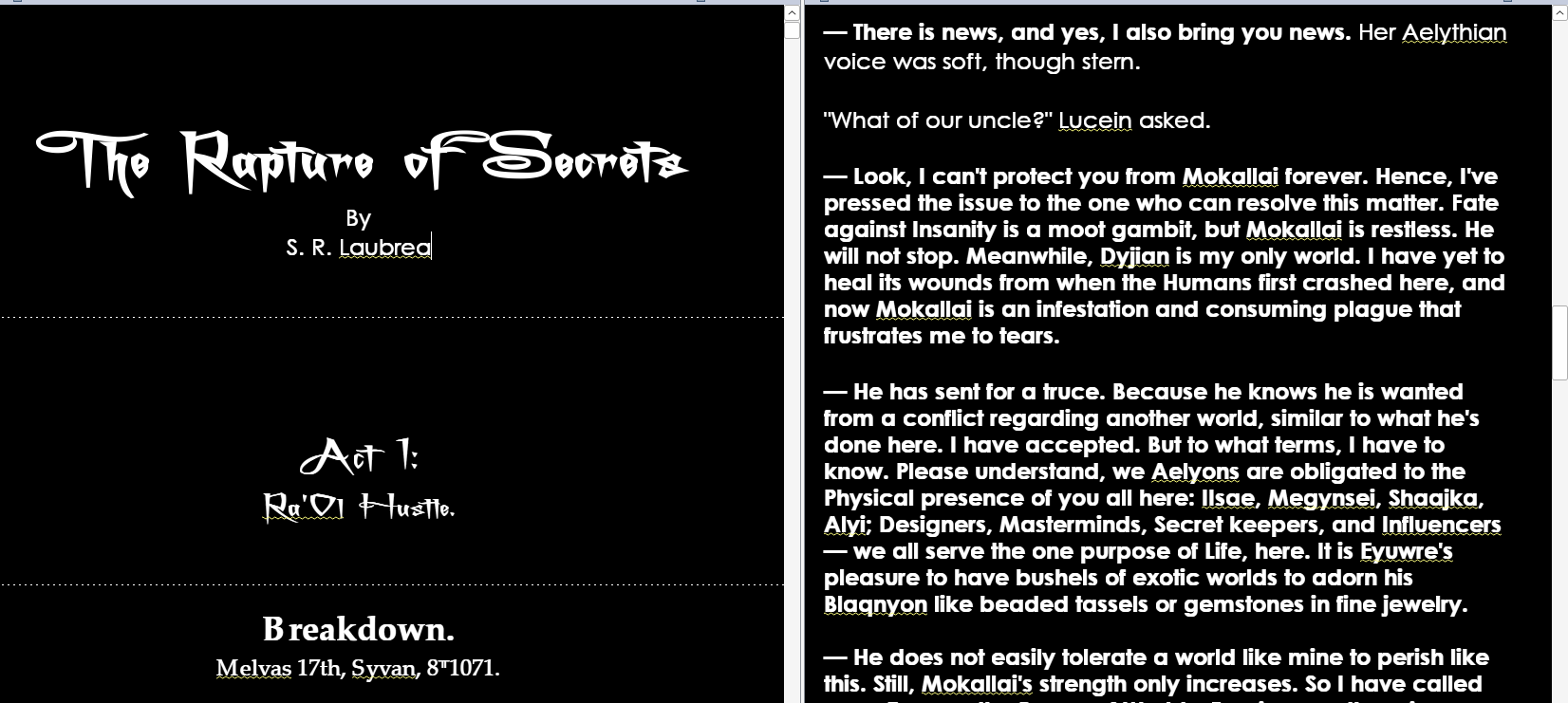
The single highest-leverage rhythm technique is the one that gets recommended and then ignored: follow a long sentence with a short one. Let a sentence build, accumulate clauses, extend the reader’s held breath, and then cut it off hard with something four or five words long. The short sentence doesn’t need to be clever. Its entire power comes from arriving right after something that wasn’t short.
Don’t turn this into a metronome either. A strict alternating pattern, long-short-long-short, becomes just as predictable and numbing as an unbroken run of either. The goal isn’t a pattern. It’s a baseline the reader has settled into, broken at the exact moment you want them to feel the break.
Reading Your Own Draft for This
Rhythm problems are hard to catch by reading silently, because your eye smooths over what your ear would catch. Read a page out loud, or have something read it to you. Where you find yourself breathless, that’s your prose doing what it’s supposed to. Where you find yourself checking out, that’s usually a rhythm that’s run too long without variation, not a plot problem at all.
Keep writing.