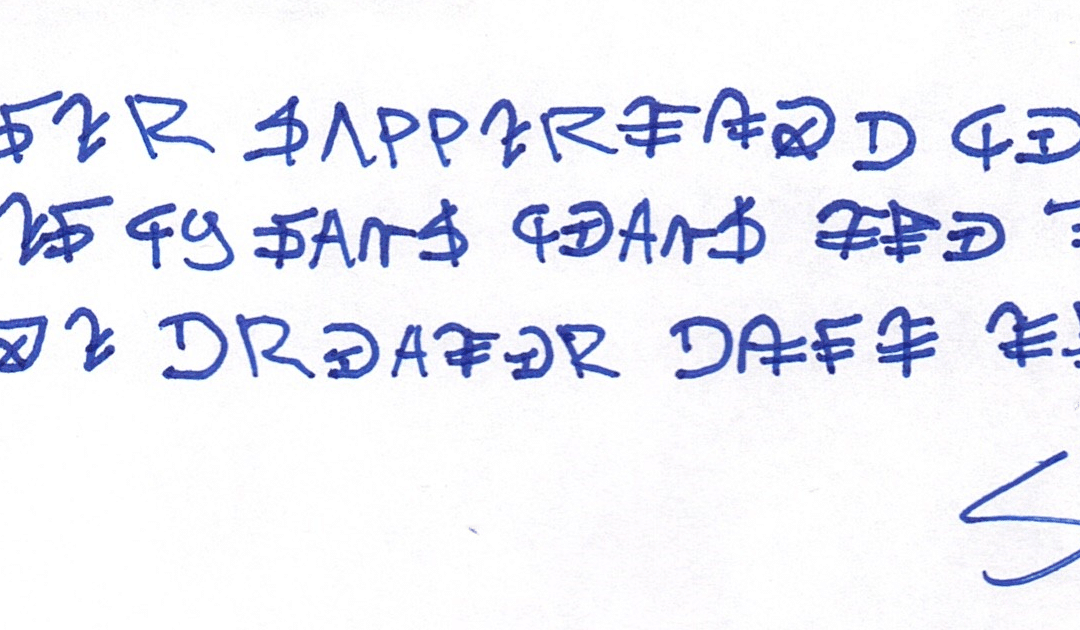
Asemic Writing is one of the joys of experimental fiction. There’s nothing quite like following up your jargon with glyphs and chicken-scratch. In my books there are several made up languages.
“Conlanging” is somethng I’ve practiced since my early chilkdhood. It bewgan with scrambled alphabetical codes and morphed into words with meanings. Before long, me and my friends were belting out gibberish and our teachers couldn’t graps what we were talking about. I’m no where near as proficiant as more skilled masters of the constructed language beat, but for what it’s worth, I’m happy with what I’ve done.
- Gyuton
- Tswaa’ii (AKA Va-vaa’ii)
- Aeliyl
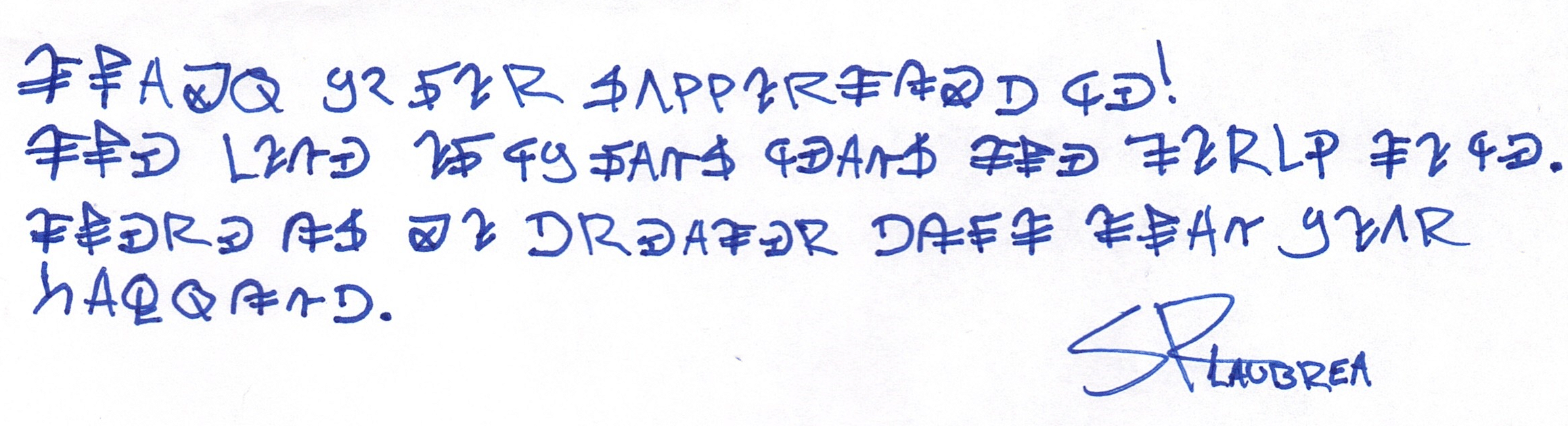
“Gyuton” stands for ‘High Speech.’ It is the proper form of language used by Humans across Yrell. It has many dialects, as many as there are sub-clutures among the human races across worlds.
I took a lot of inspiration from Slavic and Germanic languages, because I wanted something that captured the gruffness of those languages when spoken. But as time went on, I started mixing in other influences, but it got to a point where I wanted to branch off from those starting languages and come up with something of my own.
My favorite dialect of Gyuton is Knetann. It is the Slaggan dialect belonging to the Whites of Malzeyur. I love it because of the slurry conventions of writing it. For example, in Knetann, “No!” is “Ain!” They say “-eng” instead of ending words with “-ing”. “Have” and “Are” are tacked onto the back of words as contractions: “You’ar!” “I’av!”
Knetann is one of the reasons I fell in love with writing the Bog Fodder series. It feels so casual to write, it kinda sucks you in. Because there’s a sort of rhythm to the cadence of how they talk, and how they switch bet ween their local speech and the High Talk of Gyuton.
On the other hand, Tswaa’ii was intended to be less comprehensible than Gyuton and its dialects. This language is the reason why Gyuton’s grammar is dodgy: Tswaa’ii has none, and to translate a noodly language like it, Gyuton sacrificed rules and grammatical sets to be able to adapt to the needs of native Tswaa’ii speakers, the Kyusoa.
Tswaa’ii is a language where you simply ‘speak from the heart.’ It is a raw, unfiltered language intended convey emotional depth and perception more than logic and intelligence.
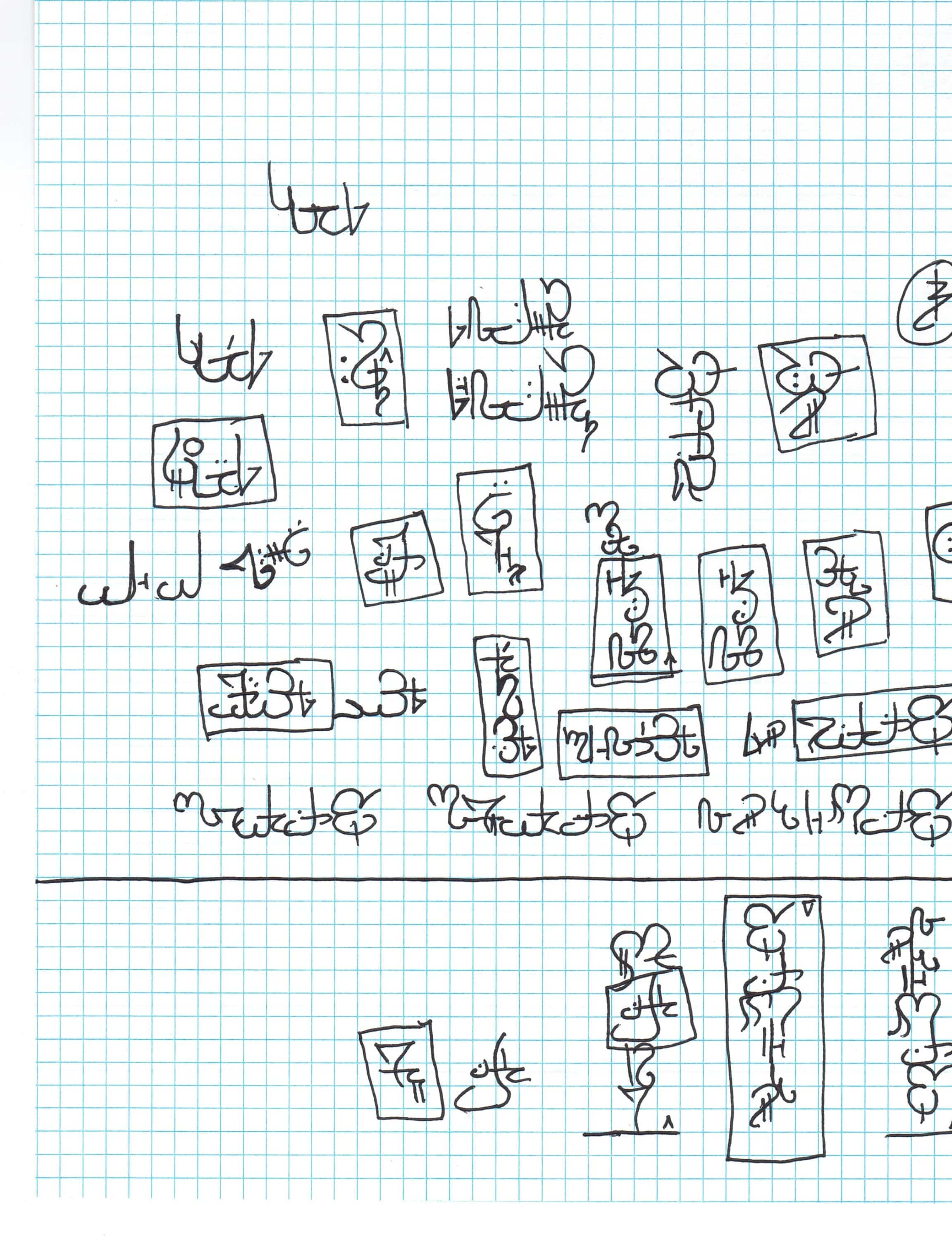
The language itself has a unique reading style: Starting from the bar on the bottom, the squiggly glyphs read upward. You start on the right. Every squiggly word following the first few read downward, as indicated by a small triangue at the top right of of the column.
The starting bar is called the “Staobar.” The trianges are called the “Tritaks.” SAentence ends are left hanging. Every new statement begins with a Staobar. Pretty straight forward, right?
I made collections of glyphs in Tswaa’ii, defining what each meant, and how they connect ot one another. Writings in Tswaa’ii are called “Nesheke,”
Then there is Aeliyl. As spoken by the Aelyons, Aeliyl takes two forms in the story: Bolded text when spoken by an Alyi… and something else (possibly) more annoying than that. At the time of writing this entry, I do not have a handwritten sample to show. However, in narrative, it reads like this:
⌠ » Cÿïët qúii fälçýr å » Past the East wall, follow the Pashmeraen that shimmers the hues of my Fate. Perhaps with you is the strength to unfurl these dreadful bonds. « Tçxï vÿév ä « ⌡
In my mind, Aeliyl is a very breathy, flowing type of speech. Those non-words are to signify the beginning of their song-like speech. The message, translated, is wrapped in the middle, and then concluded with the end in Aeliyl. I imagine it’d frustrate my readers to see that, because not even I know how to pronounce those words. They’re not meant to be pronounced, though, and I think I’ve captured that effect quite well.
Anyway. I hope this has been an interesting peep into the languages of Eyonim! So, every once in awhile, I intend to publish some of the words used in my fiction, across words: Dyjian, Ynthes, and Suggkoth, etc. If you want explanations of the jargon, check back here for my Lexicon posts. I’ll also answer questions from you guys about meanings and all that good, gushy stuff.
Cheers!~
~ Shirti